Contemporary vs Traditional Roof Lanterns: Which Should You Choose?

The best choice is mainly visual, but size, glazing-bar layout and ventilation can affect the decision. Contemporary lanterns give a cleaner, more open appearance; traditional lanterns use more glazing bars and offer a more architectural roof feature.
What is a contemporary roof lantern?
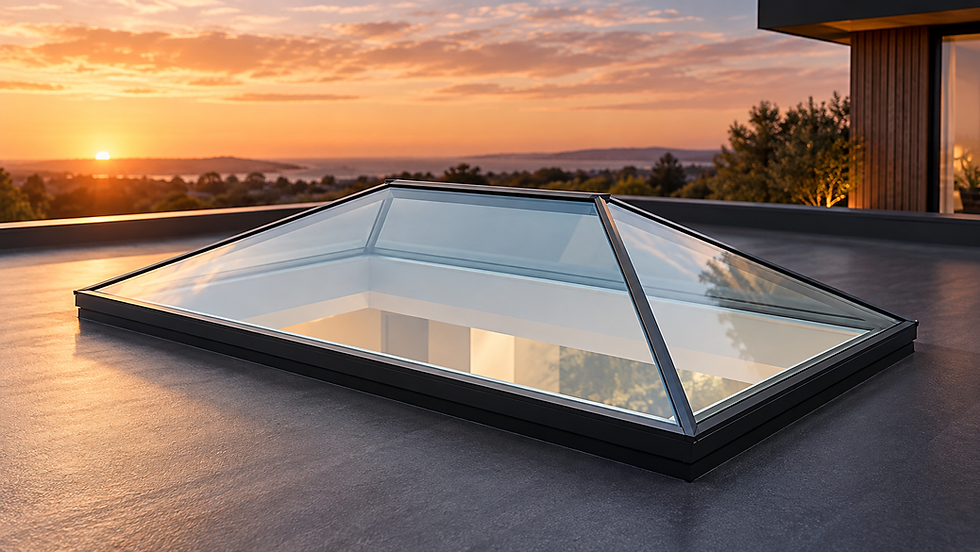
Lumina's current Atlas contemporary listing focuses on a minimal layout with fewer glazing bars and a broad, open view of the sky.
The Atlas contemporary roof lantern works particularly well where the extension has large sliding or bifold doors, simple interior lines and a modern kitchen. It can also suit an older property when the new extension is deliberately contemporary.
What is a traditional roof lantern?
The Atlas traditional range uses multiple panes and additional glazing bars to create a more detailed roof profile.
The Atlas traditional roof lantern is often chosen for orangeries, period-style extensions and rooms where the roof itself should become a stronger design feature.

Contemporary vs traditional: quick comparison
Feature | Contemporary lantern | Traditional lantern |
Overall look | Clean and minimal | Detailed and architectural |
Glazing bars | Fewer bars and broader panes | More bars and multiple panes |
Common setting | Modern extensions and open-plan interiors | Orangeries, period homes and feature roofs |
Large sizes | Best where the approved layout suits the opening | Multi-pane layouts can offer more design flexibility |
Opening roof vents | Compatibility must be confirmed | Multi-pane layouts are generally the route when vents are required |
Ordering size | External finished kerb dimensions | External finished kerb dimensions |
Which style suits your property?
Choose contemporary if…
You want the widest-looking areas of glass with fewer visible bars.
The extension has simple lines, large doors or a modern kitchen.
You want the lantern to feel light and understated.
The approved contemporary layout suits the size of your finished kerb.
Choose traditional if…
You want the roof lantern to become a more decorative feature.
The property or extension has period, orangery or conservatory influences.
You prefer the rhythm of several smaller panes.
The project is large or needs a multi-pane arrangement.
You want to discuss opening roof vents and the required compatible layout.
Do traditional lanterns only suit old houses?
No. A traditional lantern can add character to a very modern extension, particularly when it sits above a dining table or kitchen island. Likewise, a contemporary lantern can create a clean contrast against an older stone, brick or rendered property. The surrounding roof, doors, flooring and frame colour often influence the final appearance as much as the age of the house.
Does a contemporary lantern let in more light?
A contemporary layout may feel more open because there are fewer glazing bars interrupting the view. The actual amount and character of daylight also depend on the lantern's overall size, glass tint, roof orientation, room proportions and surrounding buildings or trees. Compare products at the same external kerb size before deciding.
What about larger roof lanterns?
Lumina's current traditional listing specifically positions its multi-pane layouts for larger and more traditional roof-glazing projects. Larger openings need the correct approved bar arrangement, so the final layout should be confirmed as part of the quotation.
Can both styles include opening roof vents?
Opening roof vents depend on lantern size and a compatible glazing-bar layout. If ventilation is important, tell Lumina at the quotation stage so the correct multi-pane arrangement can be checked before manufacture.
Keep appearance and glass performance separate
Contemporary and traditional describe the frame and glazing-bar layout. They do not, by themselves, confirm thermal or solar performance. Choose the style first, then compare the available glass specification for that exact product and quotation.
Glass U-value: Describes heat transfer through the glass or sealed unit. It is not automatically the U-value of the whole assembled lantern.
Whole-product U-value: Includes the glass, frame, spacers and other components. Compare whole product with whole product, and glass with glass.
Solar reflection: Is not the same measure as solar-energy rejection. Do not substitute one percentage for the other when comparing glazing.
Visible light transmission: Helps explain how bright or tinted the finished glass may feel.
Will one style cost more?
There is no single answer because the final price depends on the external kerb dimensions, approved pane layout, glass specification, frame colour, vents and whether the size is stock or made to measure. Check the live product pages for current options, or ask Lumina for a like-for-like quotation.
For quicker comparisons, you can also view the current Atlas stock roof lantern offers. Stock availability and eligible sizes can change, so check the listing or contact Lumina before planning the project around a particular option.
What information should you send for a quotation?
The external finished kerb width and length in millimetres.
A photograph, drawing or simple sketch of the extension.
Whether you prefer contemporary, traditional or would like both priced.
The external and internal frame colours.
The required glass tint and performance priority.
Whether opening roof vents are required.
The delivery postcode and any access restrictions.
Your target delivery date.
Both Atlas contemporary and traditional roof lanterns use the external finished kerb dimensions. Your builder or roofer remains responsible for confirming the opening, upstand, structure, waterproofing and installation.
Frequently asked questions
Is a traditional lantern stronger than a contemporary lantern?
Do not judge structural suitability from the number of glazing bars alone. The approved design depends on the system, dimensions, loads and manufacturer layout. Lumina will quote the suitable configuration, while the project's designer and installer remain responsible for the supporting structure.
Can I change from contemporary to traditional after ordering?
Treat the style and pane layout as fixed once manufacture has started. Check the drawings, dimensions, colours, glass and ventilation requirements carefully before approving the order.
Are both styles measured the same way?
Yes. Atlas roof lanterns are ordered using the external finished kerb width and length. Measure the completed kerb at several points and resolve any discrepancy before ordering.
Can I order online if I am unsure which style I need?
You can review the live product options online, but a phone or email enquiry is better when the opening is large, vents are required or you want both styles compared. Send the measurements and drawings so Lumina can help narrow the choice.
Does Lumina install roof lanterns?
Lumina Design is supply-only. We supply roof lanterns and rooflights to homeowners, builders and trade customers across the UK, while your chosen installer handles the kerb, roof construction, waterproofing and fitting.
Ask Lumina to compare both styles
Email your external kerb dimensions, photographs or drawings to sales@luminadesign.co.uk, or call 01656 630037. We can compare the current contemporary and traditional options and prepare a supply-only quotation for your project.

Comments