Will a Roof Lantern Make My Room Too Hot?

A roof lantern does not automatically make a room uncomfortably hot. Any large area of overhead glazing can add solar gain, but the result depends on the glazing specification, lantern size and orientation, ventilation, shading and the rest of the building fabric.
Why roof lanterns can make a room warmer
Roof glazing receives more direct sun than many vertical windows. On a bright day, some solar energy passes through the glass and warms the floor, furniture and internal surfaces. Those surfaces then release heat into the room.
That can be welcome in cooler months. In summer, the same effect may become uncomfortable when a room has a large glazed area, faces south or west, has limited opening windows, or cannot release warm air at high level.
The figures people often mix up
Glazing brochures can place percentages and U-values beside one another. They describe different things, so compare like with like.
Glass U-value: A measure of heat transfer through the glazing. Lower is better for slowing heat transfer caused by a temperature difference. It does not tell you how much direct sunshine enters.
Whole-product U-value: The performance of the complete rooflight or lantern, including glass, frame, spacer system and other components. It will not necessarily match the centre-pane or glass-unit figure.
Solar reflection: The proportion of incoming solar radiation reflected away by the glass, as defined by the supplier's test data.
Solar-energy rejection: A different measure describing how much total solar energy is prevented from passing into the room. A solar-reflection percentage must not be presented as the solar-energy rejection figure.
Visible light transmission: How much daylight passes through. This helps balance glare and heat control against the bright, open feel that prompted you to choose a roof lantern.
Choosing the Atlas glazing specification
The current Atlas contemporary roof lantern range offers glazing choices intended to balance insulation, daylight and solar control. The right choice depends on the room, its orientation and the total area of roof and wall glazing.
Ask Lumina to confirm the current glass data for the exact tint and specification before ordering. A glass U-value should not be compared directly with another supplier's whole-product figure.
Which rooms are most at risk of overheating?
The risk usually rises when several of these conditions apply at the same time:
A south-facing or west-facing roof receives strong afternoon sun.
The lantern or rooflight occupies a large proportion of the roof area.
The room has wide glazed doors as well as roof glazing.
There are few opening windows or no route for warm air to escape at high level.
The solid parts of the roof, walls or floor have limited insulation.
There is no blind, shading plan or nearby natural shade.
The space contains heat-producing appliances, especially in an open-plan kitchen.
A small lantern over a well-insulated room with good cross-ventilation behaves differently from a large glazed roof over a south-facing kitchen with bifold doors. A useful quotation starts with the room, not only the kerb size.
How to reduce the chance of a room becoming too hot
1. Choose the glazing before choosing the tint
Start with the supplier's technical figures for solar performance, U-value and visible light transmission. A darker-looking tint does not automatically prove better heat control, and a low U-value alone does not solve solar gain.
2. Consider high-level ventilation
Warm air rises. An opening roof vent or an Atlas electric opening flat rooflight can help release warm air, especially when lower-level windows or doors provide replacement air. Ventilation helps remove heat already in the room; it does not stop solar energy entering through the glass.
3. Plan shading and blinds early
A suitable blind can reduce glare and improve comfort. Discuss fixing positions, wiring and access before the roof is completed. Internal blinds and solar-control glazing perform different jobs, so use the glass data and the blind manufacturer's figures rather than assuming one substitutes for the other.
4. Insulate the rest of the roof properly
The lantern is only one part of the thermal envelope. The upstand, flat-roof build-up, walls, doors and junction details all affect summer and winter comfort. Your builder, roofer or designer should specify these elements and check compliance with the applicable building requirements.
5. Match the product to the room
A kitchen used throughout the day may need a different combination of solar control and ventilation from a north-facing dining space. Tell Lumina about the orientation, room use, other glazing and whether opening windows or doors are available.
Roof lantern and flat-rooflight options
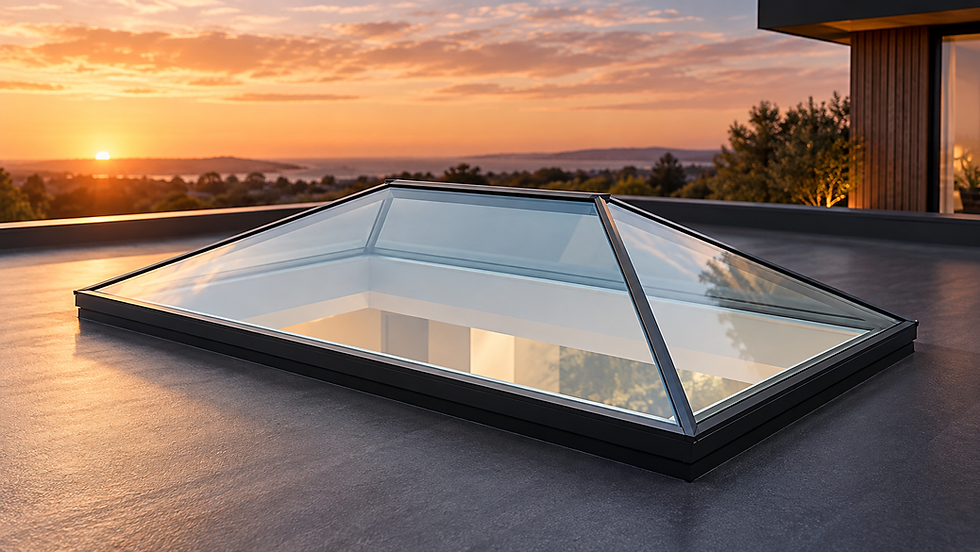
Atlas contemporary roof lantern: Choose the glass specification for the room, orientation and glazed area. Its slim frame is designed to bring in a large amount of daylight.
Atlas traditional roof lantern: The additional glazing bars change the appearance, while the same solar-gain questions still apply.
Atlas fixed flat rooflight: A low-profile fixed option. Because it does not open, plan ventilation elsewhere. It is ordered using the external finished kerb dimensions.
Atlas electric opening flat rooflight: Adds high-level ventilation. It is also ordered using the external finished kerb dimensions; opening does not change the measuring convention.
Infinity framed flat rooflight: A framed alternative. Check the selected glass specification and remember that Infinity framed rooflights use the internal structural opening for ordering.
Infinity frameless flat rooflight: A minimal-looking fixed alternative, also ordered using the internal structural opening.
Lumina Design is supply-only and does not carry out surveys, structural design or installation.
A practical checklist before requesting a quotation
External finished kerb size for Atlas lanterns and Atlas fixed or electric opening flat rooflights.
Internal structural opening for Infinity framed and frameless fixed rooflights.
Room use: kitchen, dining room, living room, office or another space.
Roof orientation and the parts of the day that receive direct sun.
Approximate floor area and any large windows, bifold doors or sliding doors.
Existing or planned ventilation, including opening windows and doors.
Preferred frame colour, glass tint and any blind requirement.
Any need for an opening vent or electric opening rooflight.
Frequently asked questions
Will solar-control glass make the room dark?
Not necessarily. Solar performance and visible light transmission are different values. Ask for the current data for the exact glass and tint, then decide how much daylight and glare control you want.
Is the lowest U-value automatically best for summer?
No. A lower U-value improves resistance to heat transfer caused by a temperature difference, but it does not by itself describe direct solar gain. Review the U-value and solar-performance data separately.
Does a high solar-reflection figure equal solar-energy rejection?
No. Solar reflection and solar-energy rejection are different measures. Use the wording and test data supplied for the exact glass specification; do not convert one figure into the other.
Will an opening rooflight stop overheating?
It can improve high-level ventilation and help warm air escape, but it does not prevent sunshine entering through the glass. The best result usually combines appropriate glazing with ventilation and, where needed, shading.
Can Lumina survey or install the roof lantern?
Lumina Design is a supply-only specialist. We can help compare products and prepare a supply quotation. Your builder, roofer, architect or surveyor remains responsible for site dimensions, the upstand, structural design, waterproofing and installation.
Ask Lumina to check the options for your room
Send the kerb dimensions, room orientation, intended use and a few photographs or drawings to sales@luminadesign.co.uk, or call 01656 630037. We can discuss the current glazing and ventilation choices and prepare a supply-only quotation for your project.

Comments